Buy rield.com ?
We are moving the project
rield.com .
Are you interested in purchasing the domain
rield.com ?
domain@kv-gmbh.de · 0541-91531010
Buy rield.com ?
What is a finite automaton?
A finite automaton is a mathematical model used to represent a system that processes input and transitions between different states based on that input. It consists of a set of states, a set of input symbols, a transition function that specifies how the automaton moves from one state to another based on the input, a start state, and a set of accepting states. Finite automata are used in computer science and theoretical computer science to model and analyze the behavior of systems that can be in a finite number of states and transition between them based on input. They are used in various applications such as lexical analysis in compilers, pattern matching in text processing, and modeling of digital circuits. **
How do you create a deterministic finite automaton from a non-deterministic pushdown automaton?
To create a deterministic finite automaton (DFA) from a non-deterministic pushdown automaton (PDA), we can use the subset construction method. This involves creating a state in the DFA for each possible combination of states in the PDA. The transitions in the DFA are determined by simulating the behavior of the PDA on each input symbol. If the PDA can be in multiple states at a given time, the DFA will have a state for each combination of those states. The final states of the DFA are determined by whether any of the PDA's possible states are final states. This process results in a deterministic finite automaton that simulates the behavior of the original non-deterministic pushdown automaton. **


Similar search terms for Automaton
Top-Angebote
Products related to Automaton:
-
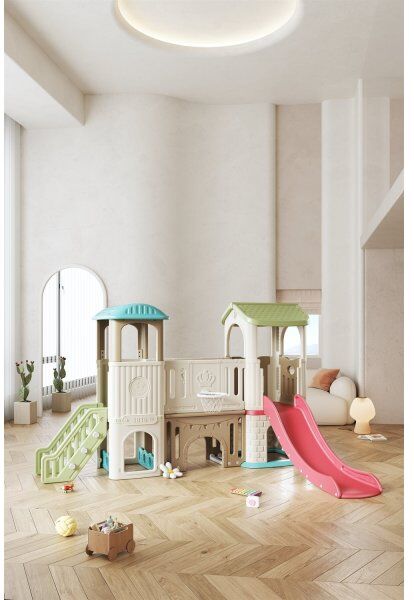
Kids Zone Adventure Park LegepladsAdventure Park Introducer dit barn til en verden af sjov og eventyr med vores fantastiske legetårne med rutsjebane! Vores legetårne er skabt med kærlighed og omtanke for at give dine børn den ultimative legeoplevelse. Legetårnene er ikke kun sjove, de er også smukt udformet. Passer perfekt ind i enhver have eller legerum og giver et imponerende syn. Det er det perfekte sted for børn at møde nye venner og udvikle venskaber, mens de leger sammen og udforsker. Der er sørget for at sikkerheden er i top. Alle materialer er af høj kvalitet, og konstruktionen er stabil og solid. Trappestige Basket Gangbro 2 legetårne Rutsjebane Legerum forneden Størrelse: 207 x 146 x 128 cm Vægt: 59 kg. Godkendelse: EN712998,75 DKK*Shipping: 31,19 DKKSecure redirect to the provider



-
How do you enter the state transition diagram of an automaton into an automaton table?
To enter the state transition diagram of an automaton into an automaton table, you first list all the states of the automaton as rows in the table. Then, list all the input symbols as columns in the table. For each state and input symbol pair, fill in the corresponding cell with the next state that the automaton transitions to. Repeat this process for all state and input symbol pairs until the entire transition diagram is represented in the automaton table. **
-
How do you transfer the state transition diagram of an automaton into an automaton table?
To transfer the state transition diagram of an automaton into an automaton table, you need to list all the states of the automaton as rows in the table. Then, list all the input symbols as columns in the table. Fill in the table with the corresponding next state for each combination of current state and input symbol based on the transitions in the state transition diagram. Finally, indicate the initial state and any final states in the table. This table can then be used to simulate the behavior of the automaton for different input sequences. **
-
How does a non-deterministic finite automaton work?
A non-deterministic finite automaton (NFA) is a theoretical model of computation that consists of a set of states, a set of input symbols, a transition function, an initial state, and a set of accepting states. Unlike a deterministic finite automaton (DFA), an NFA can have multiple possible transitions from a given state on a given input symbol. When processing input, an NFA can be in multiple states simultaneously and can transition to multiple states at once. It accepts a given input string if there exists at least one path through the states that leads to an accepting state. NFAs are often used in theoretical computer science to model certain types of computations and are a key concept in the theory of formal languages and automata. **
-
How does a deterministic finite automaton (DFA) work?
A deterministic finite automaton (DFA) is a mathematical model used to recognize patterns in strings of symbols. It consists of a finite set of states, a finite set of input symbols, a transition function that maps a state and an input symbol to another state, a start state, and a set of accepting states. The DFA starts in the start state and reads input symbols one at a time, transitioning between states according to the transition function. Once the input is fully processed, the DFA is in a final state, and if that state is an accepting state, the input is accepted; otherwise, it is rejected. DFAs are used in various applications, such as lexical analysis in compilers and pattern matching in text processing. **


What is a deterministic finite automaton in computer science?
A deterministic finite automaton (DFA) is a type of finite state machine in computer science. It consists of a set of states, a set of input symbols, a transition function that maps states and input symbols to other states, a start state, and a set of accepting states. DFAs are used to recognize patterns in input strings by transitioning between states based on the input symbols. They are simpler than nondeterministic finite automata (NFAs) as they have a unique transition for each input symbol in each state. **
What is a cellar automaton in theoretical computer science?
A cellar automaton is a type of cellular automaton in theoretical computer science. Cellular automata are discrete models studied in computer science and mathematics, consisting of a grid of cells, each of which can be in a finite number of states. The state of each cell evolves over time according to a set of rules based on the states of neighboring cells. In a cellar automaton, the grid is arranged in a three-dimensional lattice, and the state of each cell is updated based on the states of its six neighboring cells. Cellar automata are used to study complex systems and emergent behavior in various fields, including physics, biology, and computer science. **
Top-Angebote
Products related to Automaton:
-
Kids Zone Adventure Park LegepladsAdventure Park Introducer dit barn til en verden af sjov og eventyr med vores fantastiske legetårne med rutsjebane! Vores legetårne er skabt med kærlighed og omtanke for at give dine børn den ultimative legeoplevelse. Legetårnene er ikke kun sjove, de er også smukt udformet. Passer perfekt ind i enhver have eller legerum og giver et imponerende syn. Det er det perfekte sted for børn at møde nye venner og udvikle venskaber, mens de leger sammen og udforsker. Der er sørget for at sikkerheden er i top. Alle materialer er af høj kvalitet, og konstruktionen er stabil og solid. Trappestige Basket Gangbro 2 legetårne Rutsjebane Legerum forneden Størrelse: 207 x 146 x 128 cm Vægt: 59 kg. Godkendelse: EN712998,75 DKK*Shipping: 31,19 DKKSecure redirect to the provider
-
What is a finite automaton?
A finite automaton is a mathematical model used to represent a system that processes input and transitions between different states based on that input. It consists of a set of states, a set of input symbols, a transition function that specifies how the automaton moves from one state to another based on the input, a start state, and a set of accepting states. Finite automata are used in computer science and theoretical computer science to model and analyze the behavior of systems that can be in a finite number of states and transition between them based on input. They are used in various applications such as lexical analysis in compilers, pattern matching in text processing, and modeling of digital circuits. **
-
How do you create a deterministic finite automaton from a non-deterministic pushdown automaton?
To create a deterministic finite automaton (DFA) from a non-deterministic pushdown automaton (PDA), we can use the subset construction method. This involves creating a state in the DFA for each possible combination of states in the PDA. The transitions in the DFA are determined by simulating the behavior of the PDA on each input symbol. If the PDA can be in multiple states at a given time, the DFA will have a state for each combination of those states. The final states of the DFA are determined by whether any of the PDA's possible states are final states. This process results in a deterministic finite automaton that simulates the behavior of the original non-deterministic pushdown automaton. **
-
How do you enter the state transition diagram of an automaton into an automaton table?
To enter the state transition diagram of an automaton into an automaton table, you first list all the states of the automaton as rows in the table. Then, list all the input symbols as columns in the table. For each state and input symbol pair, fill in the corresponding cell with the next state that the automaton transitions to. Repeat this process for all state and input symbol pairs until the entire transition diagram is represented in the automaton table. **
-
How do you transfer the state transition diagram of an automaton into an automaton table?
To transfer the state transition diagram of an automaton into an automaton table, you need to list all the states of the automaton as rows in the table. Then, list all the input symbols as columns in the table. Fill in the table with the corresponding next state for each combination of current state and input symbol based on the transitions in the state transition diagram. Finally, indicate the initial state and any final states in the table. This table can then be used to simulate the behavior of the automaton for different input sequences. **
Similar search terms for Automaton
-
Uyuni Outdoor Lanterne & FjernbetjeningSkab en hyggelig atmosfære på terrassen, altanen eller i haven med denne stilrene Uyuni Outdoor lanterne. Den kombinerer et moderne design med et naturtro LED-lys, der giver et varmt og behageligt skær uden sod, røg eller stearin. Den medfølgende fjernbetjening gør det nemt at styre lyset, uanset om lanternen bruges ude eller inde. De vigtigste fordele Komplet sæt med lanterne, LED-lys og fjernbetjening Naturtro LED-flamme skaber et varmt og stemningsfuldt lys Velegnet til både indendørs og udendørs brug Fremstillet i vejrbestandige materialer Fjernbetjening med tænd/sluk-, dæmpe- og timerfunktion Stilrent design, der passer til mange indretningsstile Stemningsfuld belysning året rundt Lanternen er udviklet til udendørs brug og kan skabe en indbydende atmosfære på terrasser, altaner og i haver. Det enkle design gør den samtidig velegnet som dekorativ belysning i entréer, stuer eller orangerier. Nem betjening med fjernbetjening Den medfølgende fjernbetjening giver mulighed for at tænde, slukke, dæmpe lyset og aktivere timerfunktion med et enkelt tryk. Det gør det let at tilpasse belysningen efter behov og skabe den ønskede stemning. Specifikationer Indeholder: 1 stk. Uyuni Outdoor lanterne Indeholder: 1 stk. Uyuni Outdoor LED-lys Indeholder: 1 stk. fjernbetjening Anvendelse: Indendørs og udendørs Materialer: Vejrbestandige materialer375,00 DKK*Shipping: 81,19 DKKSecure redirect to the provider
-
How does a non-deterministic finite automaton work?
A non-deterministic finite automaton (NFA) is a theoretical model of computation that consists of a set of states, a set of input symbols, a transition function, an initial state, and a set of accepting states. Unlike a deterministic finite automaton (DFA), an NFA can have multiple possible transitions from a given state on a given input symbol. When processing input, an NFA can be in multiple states simultaneously and can transition to multiple states at once. It accepts a given input string if there exists at least one path through the states that leads to an accepting state. NFAs are often used in theoretical computer science to model certain types of computations and are a key concept in the theory of formal languages and automata. **
-
How does a deterministic finite automaton (DFA) work?
A deterministic finite automaton (DFA) is a mathematical model used to recognize patterns in strings of symbols. It consists of a finite set of states, a finite set of input symbols, a transition function that maps a state and an input symbol to another state, a start state, and a set of accepting states. The DFA starts in the start state and reads input symbols one at a time, transitioning between states according to the transition function. Once the input is fully processed, the DFA is in a final state, and if that state is an accepting state, the input is accepted; otherwise, it is rejected. DFAs are used in various applications, such as lexical analysis in compilers and pattern matching in text processing. **
-
What is a deterministic finite automaton in computer science?
A deterministic finite automaton (DFA) is a type of finite state machine in computer science. It consists of a set of states, a set of input symbols, a transition function that maps states and input symbols to other states, a start state, and a set of accepting states. DFAs are used to recognize patterns in input strings by transitioning between states based on the input symbols. They are simpler than nondeterministic finite automata (NFAs) as they have a unique transition for each input symbol in each state. **
-
What is a cellar automaton in theoretical computer science?
A cellar automaton is a type of cellular automaton in theoretical computer science. Cellular automata are discrete models studied in computer science and mathematics, consisting of a grid of cells, each of which can be in a finite number of states. The state of each cell evolves over time according to a set of rules based on the states of neighboring cells. In a cellar automaton, the grid is arranged in a three-dimensional lattice, and the state of each cell is updated based on the states of its six neighboring cells. Cellar automata are used to study complex systems and emergent behavior in various fields, including physics, biology, and computer science. **
* All prices are inclusive of VAT and, if applicable, plus shipping costs. The offer information is based on the details provided by the respective shop and is updated through automated processes. Real-time updates do not occur, so deviations can occur in individual cases. ** Note: Parts of this content were created by AI.