Buy rield.com ?
We are moving the project
rield.com .
Are you interested in purchasing the domain
rield.com ?
domain@kv-gmbh.de · 0541-91531010
Buy rield.com ?
Are complementary events disjoint?
Complementary events are not necessarily disjoint. Complementary events are two events that together cover all possible outcomes of an experiment. Disjoint events, on the other hand, are events that have no outcomes in common. While complementary events are mutually exclusive, they can still have some outcomes in common, unlike disjoint events. **
What are complementary colors?
Complementary colors are pairs of colors that are located directly opposite each other on the color wheel. When placed next to each other, complementary colors create a strong contrast and enhance each other's intensity. Examples of complementary color pairs include red and green, blue and orange, and yellow and purple. **


Similar search terms for Complementary
Top-Angebote
Products related to Complementary:
-
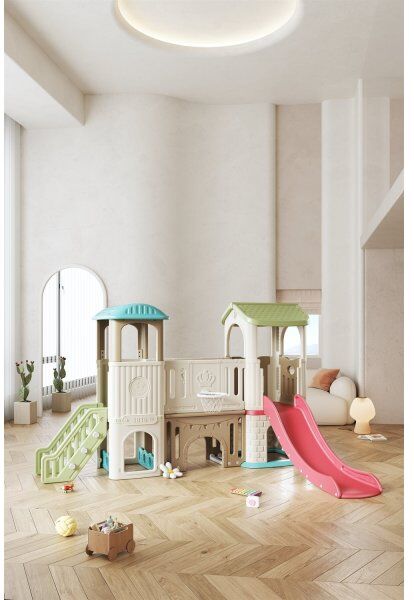
Kids Zone Adventure Park LegepladsAdventure Park Introducer dit barn til en verden af sjov og eventyr med vores fantastiske legetårne med rutsjebane! Vores legetårne er skabt med kærlighed og omtanke for at give dine børn den ultimative legeoplevelse. Legetårnene er ikke kun sjove, de er også smukt udformet. Passer perfekt ind i enhver have eller legerum og giver et imponerende syn. Det er det perfekte sted for børn at møde nye venner og udvikle venskaber, mens de leger sammen og udforsker. Der er sørget for at sikkerheden er i top. Alle materialer er af høj kvalitet, og konstruktionen er stabil og solid. Trappestige Basket Gangbro 2 legetårne Rutsjebane Legerum forneden Størrelse: 207 x 146 x 128 cm Vægt: 59 kg. Godkendelse: EN712998,75 DKK*Shipping: 31,19 DKKSecure redirect to the provider



-
Are two vectors always complementary?
No, two vectors are not always complementary. Two vectors are considered complementary if their dot product is zero, which means they are perpendicular to each other. However, two vectors can have a non-zero dot product and still not be complementary. Complementary vectors are a specific case of perpendicular vectors, but not all perpendicular vectors are necessarily complementary. **
-
What is a complementary color?
Complementary colors are pairs of colors that are located opposite each other on the color wheel. When placed next to each other, they create a strong contrast and enhance each other's intensity. Mixing complementary colors together can create a neutral color, such as gray or brown. Using complementary colors in design can create visually striking and harmonious compositions. **
-
What is the complementary event?
The complementary event of an event A is the event that A does not occur. In other words, it is the event that consists of all outcomes that are not in event A. The probability of the complementary event is equal to 1 minus the probability of event A. For example, if event A is rolling a 6 on a fair six-sided die, then the complementary event is rolling any number other than 6. **
-
What is a complementary narcissist?
A complementary narcissist is someone who exhibits narcissistic traits but in a way that complements or fits with the traits of another narcissist. They may be drawn to a more overtly narcissistic individual and may enable or support their behavior, often seeking validation and a sense of identity through their relationship with the more dominant narcissist. Complementary narcissists may also engage in a power dynamic with the dominant narcissist, playing a role that supports and enhances the dominant narcissist's ego while also benefiting from the relationship in some way. **


What is a complementary strand?
A complementary strand is a strand of DNA or RNA that has a sequence of nucleotides that are complementary to the sequence of nucleotides in another strand. In DNA, adenine pairs with thymine and guanine pairs with cytosine, so the complementary strand will have thymine paired with adenine and cytosine paired with guanine. This complementary base pairing allows DNA to replicate and RNA to be transcribed accurately. **
What are self-complementary graphs?
Self-complementary graphs are graphs that are isomorphic to their own complement. In other words, if you take a graph and replace each edge with a non-edge and each non-edge with an edge, you will get the same graph. Self-complementary graphs have a number of interesting properties and are often used in graph theory to study symmetrical structures and relationships between vertices and edges. Examples of self-complementary graphs include the Petersen graph and the Paley graph. **
Top-Angebote
Products related to Complementary:
-
Kids Zone Adventure Park LegepladsAdventure Park Introducer dit barn til en verden af sjov og eventyr med vores fantastiske legetårne med rutsjebane! Vores legetårne er skabt med kærlighed og omtanke for at give dine børn den ultimative legeoplevelse. Legetårnene er ikke kun sjove, de er også smukt udformet. Passer perfekt ind i enhver have eller legerum og giver et imponerende syn. Det er det perfekte sted for børn at møde nye venner og udvikle venskaber, mens de leger sammen og udforsker. Der er sørget for at sikkerheden er i top. Alle materialer er af høj kvalitet, og konstruktionen er stabil og solid. Trappestige Basket Gangbro 2 legetårne Rutsjebane Legerum forneden Størrelse: 207 x 146 x 128 cm Vægt: 59 kg. Godkendelse: EN712998,75 DKK*Shipping: 31,19 DKKSecure redirect to the provider
-
Are complementary events disjoint?
Complementary events are not necessarily disjoint. Complementary events are two events that together cover all possible outcomes of an experiment. Disjoint events, on the other hand, are events that have no outcomes in common. While complementary events are mutually exclusive, they can still have some outcomes in common, unlike disjoint events. **
-
What are complementary colors?
Complementary colors are pairs of colors that are located directly opposite each other on the color wheel. When placed next to each other, complementary colors create a strong contrast and enhance each other's intensity. Examples of complementary color pairs include red and green, blue and orange, and yellow and purple. **
-
Are two vectors always complementary?
No, two vectors are not always complementary. Two vectors are considered complementary if their dot product is zero, which means they are perpendicular to each other. However, two vectors can have a non-zero dot product and still not be complementary. Complementary vectors are a specific case of perpendicular vectors, but not all perpendicular vectors are necessarily complementary. **
-
What is a complementary color?
Complementary colors are pairs of colors that are located opposite each other on the color wheel. When placed next to each other, they create a strong contrast and enhance each other's intensity. Mixing complementary colors together can create a neutral color, such as gray or brown. Using complementary colors in design can create visually striking and harmonious compositions. **
Similar search terms for Complementary
-
Uyuni Outdoor Lanterne & FjernbetjeningSkab en hyggelig atmosfære på terrassen, altanen eller i haven med denne stilrene Uyuni Outdoor lanterne. Den kombinerer et moderne design med et naturtro LED-lys, der giver et varmt og behageligt skær uden sod, røg eller stearin. Den medfølgende fjernbetjening gør det nemt at styre lyset, uanset om lanternen bruges ude eller inde. De vigtigste fordele Komplet sæt med lanterne, LED-lys og fjernbetjening Naturtro LED-flamme skaber et varmt og stemningsfuldt lys Velegnet til både indendørs og udendørs brug Fremstillet i vejrbestandige materialer Fjernbetjening med tænd/sluk-, dæmpe- og timerfunktion Stilrent design, der passer til mange indretningsstile Stemningsfuld belysning året rundt Lanternen er udviklet til udendørs brug og kan skabe en indbydende atmosfære på terrasser, altaner og i haver. Det enkle design gør den samtidig velegnet som dekorativ belysning i entréer, stuer eller orangerier. Nem betjening med fjernbetjening Den medfølgende fjernbetjening giver mulighed for at tænde, slukke, dæmpe lyset og aktivere timerfunktion med et enkelt tryk. Det gør det let at tilpasse belysningen efter behov og skabe den ønskede stemning. Specifikationer Indeholder: 1 stk. Uyuni Outdoor lanterne Indeholder: 1 stk. Uyuni Outdoor LED-lys Indeholder: 1 stk. fjernbetjening Anvendelse: Indendørs og udendørs Materialer: Vejrbestandige materialer375,00 DKK*Shipping: 81,19 DKKSecure redirect to the provider
-
What is the complementary event?
The complementary event of an event A is the event that A does not occur. In other words, it is the event that consists of all outcomes that are not in event A. The probability of the complementary event is equal to 1 minus the probability of event A. For example, if event A is rolling a 6 on a fair six-sided die, then the complementary event is rolling any number other than 6. **
-
What is a complementary narcissist?
A complementary narcissist is someone who exhibits narcissistic traits but in a way that complements or fits with the traits of another narcissist. They may be drawn to a more overtly narcissistic individual and may enable or support their behavior, often seeking validation and a sense of identity through their relationship with the more dominant narcissist. Complementary narcissists may also engage in a power dynamic with the dominant narcissist, playing a role that supports and enhances the dominant narcissist's ego while also benefiting from the relationship in some way. **
-
What is a complementary strand?
A complementary strand is a strand of DNA or RNA that has a sequence of nucleotides that are complementary to the sequence of nucleotides in another strand. In DNA, adenine pairs with thymine and guanine pairs with cytosine, so the complementary strand will have thymine paired with adenine and cytosine paired with guanine. This complementary base pairing allows DNA to replicate and RNA to be transcribed accurately. **
-
What are self-complementary graphs?
Self-complementary graphs are graphs that are isomorphic to their own complement. In other words, if you take a graph and replace each edge with a non-edge and each non-edge with an edge, you will get the same graph. Self-complementary graphs have a number of interesting properties and are often used in graph theory to study symmetrical structures and relationships between vertices and edges. Examples of self-complementary graphs include the Petersen graph and the Paley graph. **
* All prices are inclusive of VAT and, if applicable, plus shipping costs. The offer information is based on the details provided by the respective shop and is updated through automated processes. Real-time updates do not occur, so deviations can occur in individual cases. ** Note: Parts of this content were created by AI.